Which coast, which hour, which season — and why the light here does not behave like Mallorca's.
Almost every scheduling decision we make on a property shoot is a decision about light. Not about equipment, not about crew size — about which hour a particular wall, terrace or cliff face is at its best, and how many of those hours we can reach in a single day.
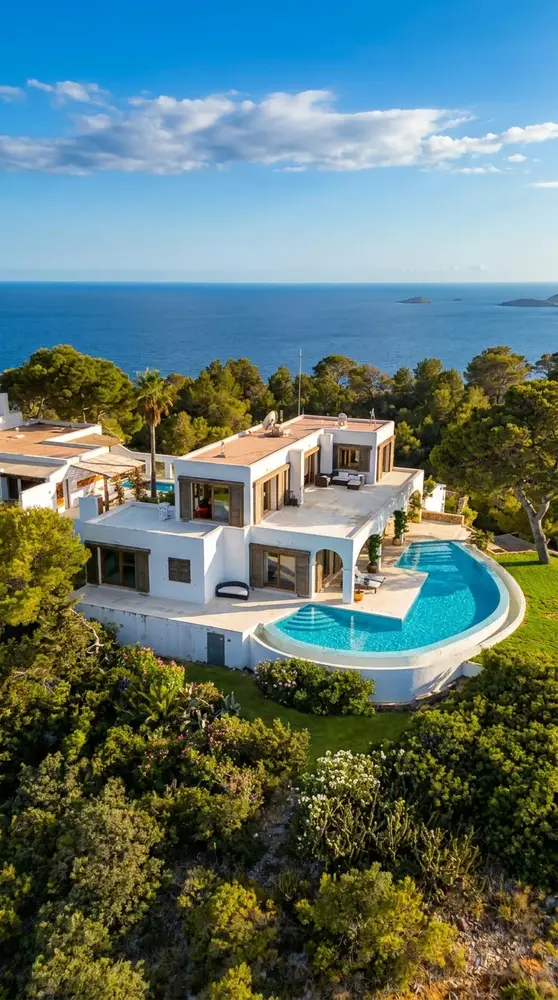
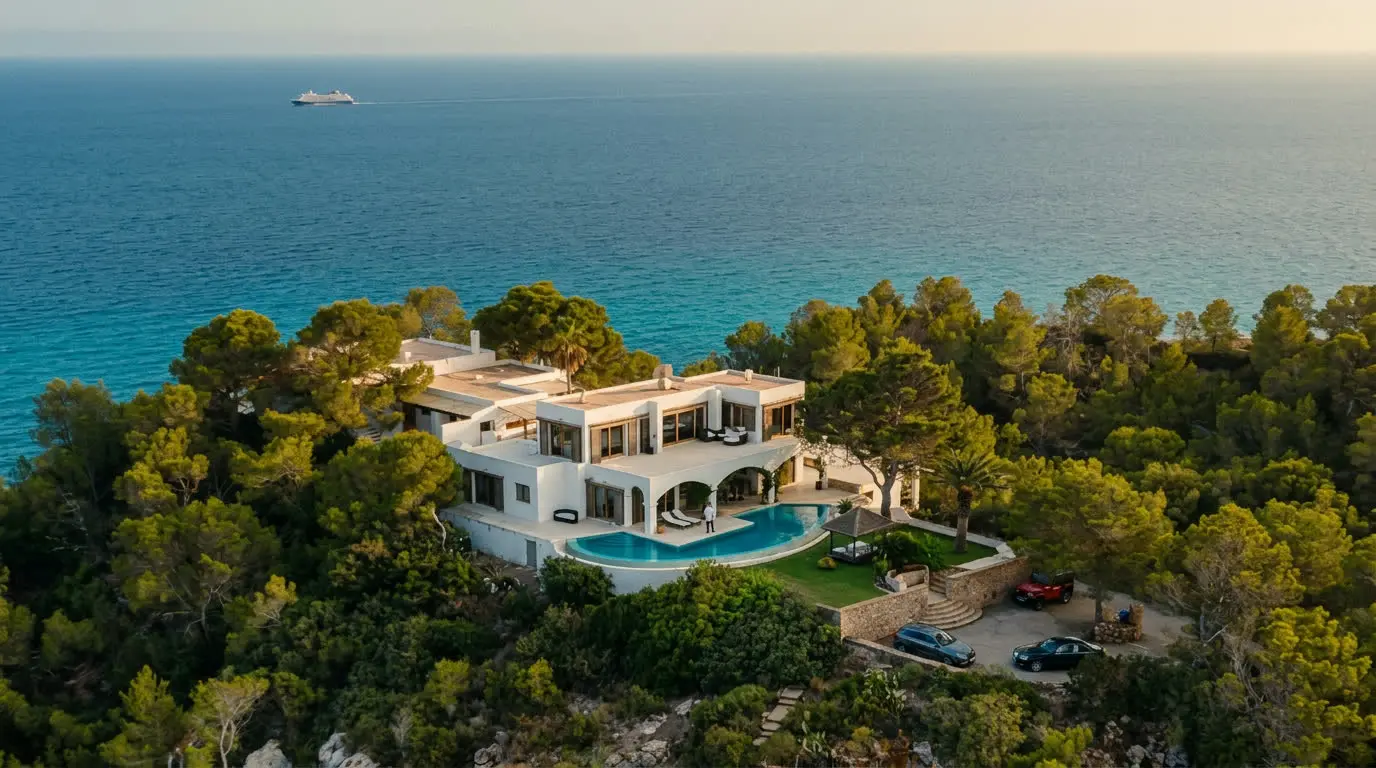
In Ibiza the geography makes this unusually straightforward. The dramatic property is concentrated on the south and west coasts, which means the best material almost always falls in the last two hours of the day. Sant Josep, Cala Jondal, Es Cubells, Cala d'Hort: we shoot these late, with the sun going down over the water and the cliffs still holding warmth. Trying to film a west-facing clifftop villa in the morning is a way of making a spectacular house look flat.
The east and the interior
The east coast reverses it. Santa Eulària, Roca Llisa, Cala Llonga and the S'Argamassa stretch have the best sunrises on the island, and a sea-front terrace there at half past seven in June is worth more than the same terrace at any other hour. It also means a well-planned day can cover both coasts: east at first light, interiors through the middle, west for the finish.
The interior — Santa Gertrudis, Sant Llorenç, the flat farmland in the centre — has no horizon to work with, so light behaves differently. What matters there is shade: the pattern under a pergola, the depth of a metre-thick reveal, the low sun raking across a lime-washed wall at seven in the evening. Fincas photograph badly at noon and beautifully an hour before sunset.
Golden hour by season
In June and July, sunset sits around half past nine, the golden window is short and hard, and the air is often hazy with heat. In May and September, our two favourite months, the sun sets between eight and half past, the window stretches, and the colour is warmer without being orange. October through February gives the longest and softest light of the year, low all day, which suits interiors and stone; the trade-off is that the whole usable day is compressed and one shoot can no longer cover two coasts.
Why Ibiza is not Mallorca
Mallorca has mountains, and mountains create shadow, weather and reflected light. In the Tramuntana or above Pollença the light arrives later, leaves earlier and carries a cooler, greener cast from the terraces and pine. Andratx can be in shade while the bay in front of it is still bright.
Ibiza is lower, drier and surrounded by more open water, so the light is harder, whiter at midday and considerably more forgiving in the evening — it wraps rather than falls. It is why white render, lime and sabina timber look the way they do here and slightly different sixty miles north. We schedule the two islands as if they were separate countries, because photographically they are.