After filming more than a hundred and twenty properties, we have stopped believing that buyers are persuaded by specifications.
We have now filmed more than a hundred and twenty properties across Ibiza, Formentera and Mallorca, and the pattern is consistent enough that we no longer argue about it internally. The houses that sell quickly are almost never the houses with the best specification sheet. They are the houses whose story was told properly.
A listing describes a property. Six bedrooms, eight hundred square metres, plot of two hectares, pool, guest house, sea view. Every one of those facts is true and none of them is the reason someone spends five million euros. The reason is almost always an idea the buyer has about their own life — August with the whole family here, a work-from-anywhere winter, the first time they open the doors in the morning and hear nothing at all. Specifications confirm a decision. Stories cause one.
Buyers decide emotionally, then justify technically
Watch how an international buyer actually behaves. They see a property somewhere — a portal, an agent's Instagram, a forwarded link — and in the first fifteen seconds they either lean in or move on. Nothing technical happens in those fifteen seconds. What happens is a feeling, produced almost entirely by images and motion: light on a wall, a door opening onto a terrace, water, quiet.
Only after that feeling arrives does the technical process begin, and it is at that point that plans, orientation, licences, cadastral details and price per square metre start to matter enormously. The mistake most marketing makes is to lead with the second phase and hope the first takes care of itself. It does not. If the first fifteen seconds fail, the plans are never opened.
This is why we shoot lifestyle before architecture. Not lifestyle in the sense of models with cocktails, which nobody has believed for a decade, but the honest daily texture of the house: the shade at three in the afternoon, the wind in the pines, the walk down to the water, the kitchen with the doors folded back. Buyers are not buying a building. They are buying an idea of how their days will feel inside it.
What we have learned from a hundred and twenty houses
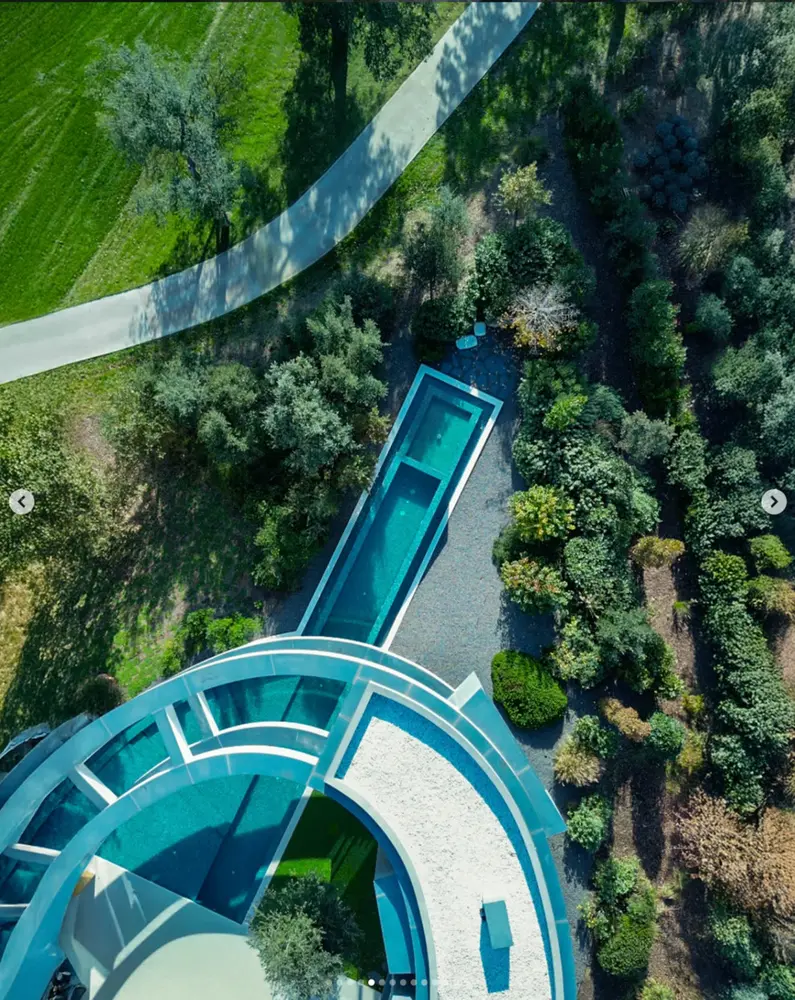
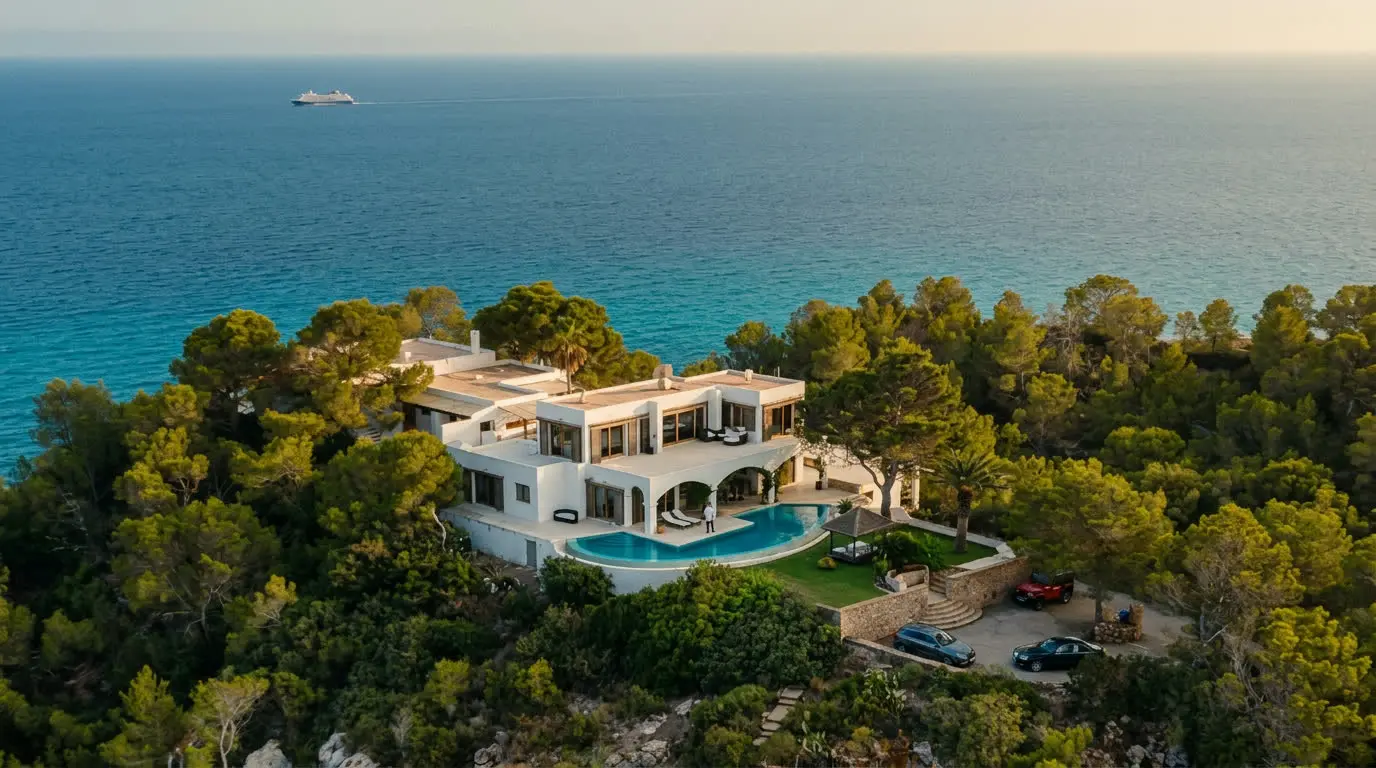
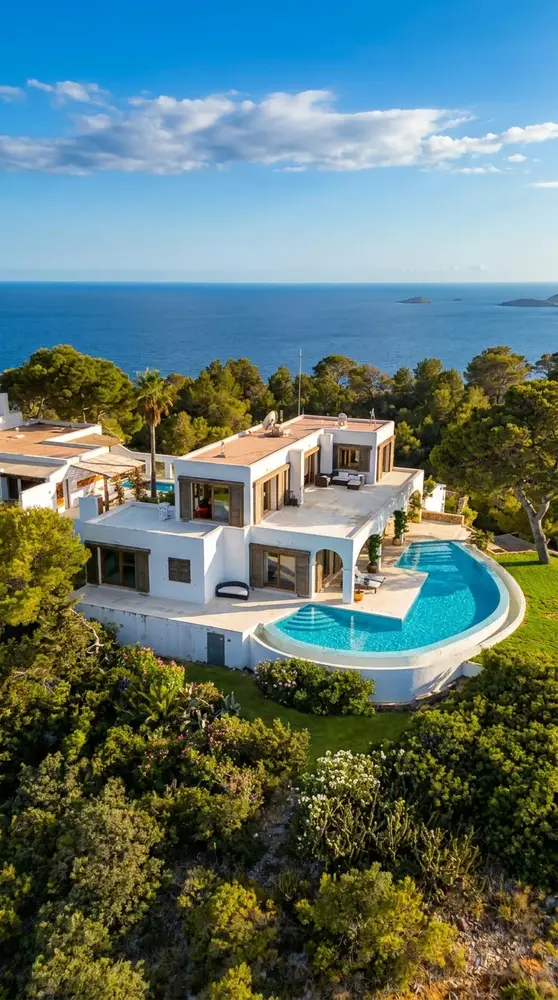
The first thing is that land beats interiors. In Ibiza especially, the single most valuable fact about a property is usually invisible from the ground — that it holds an entire headland, that the neighbouring plot cannot be built on, that the nearest house is half a kilometre away. If that fact is not established in the first twenty seconds of a film, the property is being undersold, sometimes by a very large amount.
The second is that quiet outperforms spectacle. Fast edits, heavy music and constant camera movement make a large house feel smaller and a calm house feel anxious. The films that generate enquiries are slower than most clients expect on first viewing. We hold frames. We use natural sound. We let a room be empty for three seconds. Buyers read that as confidence.
The third is that the format matters as much as the footage. A beautiful film sitting inside a portal listing next to twelve compressed thumbnails is doing a fraction of the work it could. The same film on the property's own page — with the gallery, the plans, the virtual tour and the area around it — becomes something an agent can send as a single link and a buyer can spend twenty minutes inside.
The practical version
If we had to compress all of it into advice for an owner or an agent preparing a property for market, it would be this. Establish the land first, from the air, early in the morning. Show the house living rather than posing. Give the surrounding area real space, because in the Balearics people buy a bay or a valley as much as a building. Put everything behind one link that you control. And resist the urge to add more — the property is usually strong enough on its own, provided someone has bothered to look at it properly.
None of this is a marketing trick. It is simply the difference between presenting a property as inventory and presenting it as a place. Extraordinary houses lose money every day because they were photographed as ordinary ones.